Old lines are still visible
A previous layout can continue to direct drivers even after the property has changed. Removing the obsolete markings makes the intended pavement use easier to understand.

Marking removal
Lone Star Striping Pros provides pavement marking removal in Rockwall, Texas, to clear unwanted lines, symbols, numbers, and other painted markings. Removing outdated markings can help prepare the pavement for a new layout or prevent drivers from following directions that no longer apply.
Open 24/7 across Rockwall · Flat-rate pricing quoted before we start
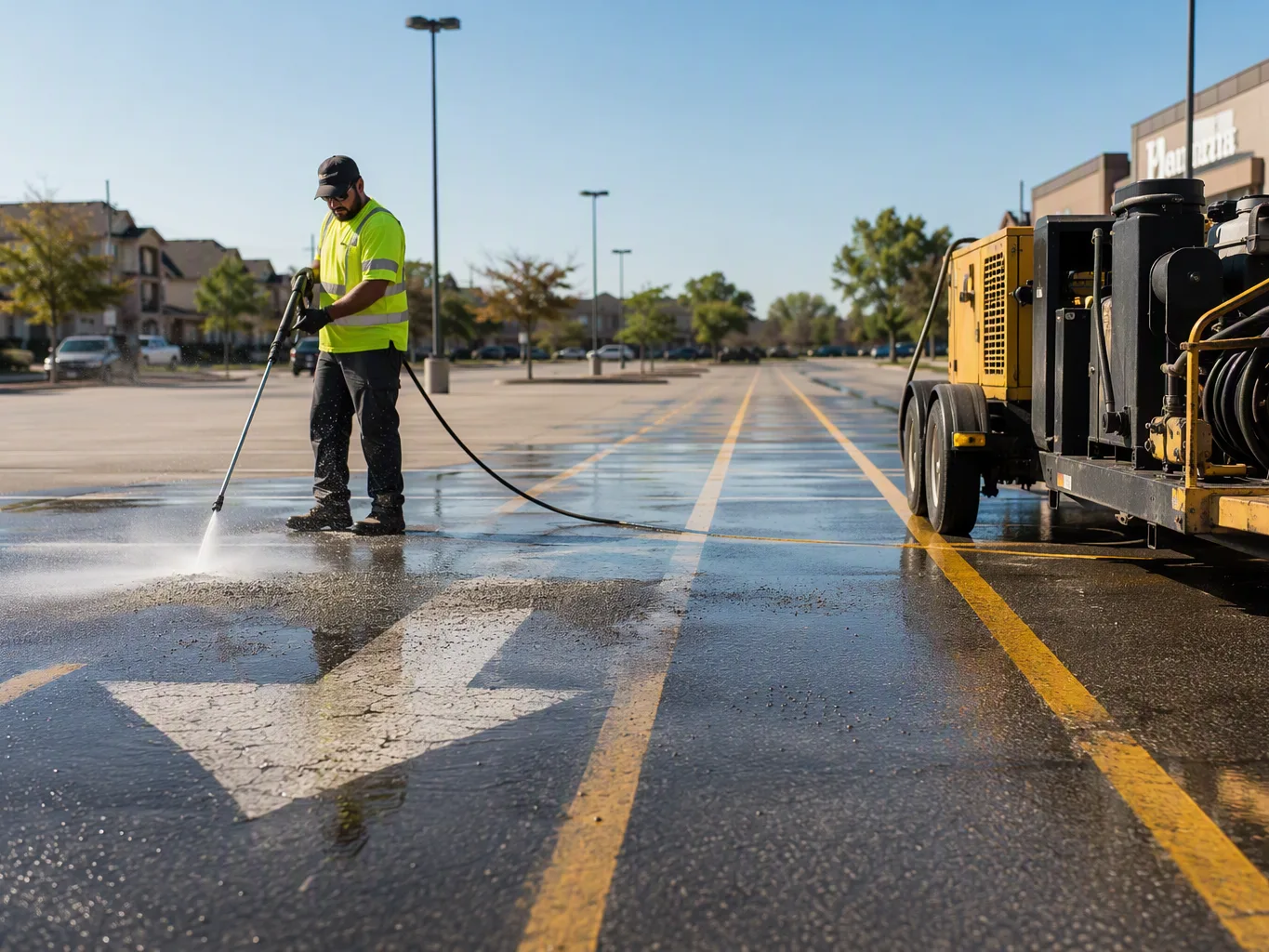
Old pavement markings can remain visible after a parking layout, traffic pattern, or property use has changed. Removing those markings helps create a cleaner surface and makes it easier to establish a new layout without old lines competing with the updated design.
Lone Star Striping Pros identifies the markings that need to be removed and the areas that should remain intact. The removal method depends on the pavement and existing paint, with cleanup performed afterward so the surface is ready for new striping when needed.
Symptoms
A previous layout can continue to direct drivers even after the property has changed. Removing the obsolete markings makes the intended pavement use easier to understand.
Painting new lines over visible old lines can leave competing stall boundaries, arrows, or symbols. Clearing the markings first gives the new layout a cleaner starting point.
When stalls, access aisles, or traffic paths change position, the former markings need to be addressed so drivers are not left choosing between two layouts.
Individual numbers, arrows, words, and symbols can be removed when they no longer match how the paved area is being used.
Our process
The removal area is identified before work begins. Existing lines, symbols, numbers, and nearby markings are separated into what should be removed and what should stay.
The pavement around the markings is checked and the work area is arranged for removal. Loose material and surface debris are cleared so the removal tool can work against the pavement marking.
A suitable removal method is used on the obsolete paint or marking. The work follows the shape of the marking and avoids treating surrounding pavement as though it also needs to be removed.
The removed material is collected from the work area. The surface is then reviewed to identify any remaining marking that could affect the appearance or placement of a new layout.
Scope
The quote is based on the markings being removed, the total removal area, the pavement surface, and the access needed to complete the work.
Request serviceYes. The removal area can be identified marking by marking so lines, numbers, symbols, or other pavement markings that still belong to the layout can remain.
The goal is to clear the obsolete marking from the pavement. The result depends on the marking material, the pavement surface, and how long the marking has been in place.
Removal can be completed as part of preparing for a new pavement layout. The surface should be reviewed after the old markings are cleared before new paint is applied.
The appropriate removal approach depends on the surface and the marking. The pavement type and condition are considered when the work is reviewed.
Related services
Tell us what needs to be striped and what you have in mind. We’ll discuss the work, answer your questions, and help determine what the property needs.
Hi there 👋
You're chatting with Lone Star Striping Pros. How can we help?
A real striping contractor picks up — no hold music, no call center. Ask us anything about layouts, ADA, fire lanes, sealcoating, or a lot that has to reopen Monday.
Enter your phone number and we'll call you within 9 seconds
Lone Star Striping Pros
Pick an arrival window
We'll confirm by phone or text before dispatching a technician. No charge until you approve the work.
Thanks — we have your details, and someone will call you back to confirm. If it's urgent, call (469) 626-2466.
We'll call you within 9 seconds.
Simply dial us
It takes a few seconds and it genuinely helps us.
Pick whichever is closest — you can add detail on the next step.